Showing posts with label racing. Show all posts

Wednesday, January 4, 2017

Poor FTP testing?

I received this email from an athlete with a common question about what to do if you just don't tend to be a good at testing for FTP, with results that seem to match what your race performances show.

Happy New Year Sir,

I've recently gotten through Triathlon 2.0 and Run with Power and have found them to be quite helpful. I was familiar with most of the concepts in 2.0 but you provided a lot of additional context that I was missing before. 

The question, or problem that I have really, is an inability to FTP test well. Over the past few seasons my FTP hasn't risen above 228 (averaged 240 in 20 minute test) but my overall fitness and endurance has steadily improved. Is there a way you would recommend "backing into" threshold power based on a long ride, etc? I'm getting more fit, just not any faster. Comparable 40 mile rides from 2015 and 2016 are done at the same speed, avg power, etc, but my avg HR is 18 bpm less.

I raced Ironman Mont Tremblant in August and while only my second fastest Ironman, it was by far my most complete and well executed race. I knew my FTP wasn't right so I rode race day by feel with an occasional glance at HR. Based on an FTP of 228 my NP was 174, IF was .76, Pw:HR was -0.84% and TSS was 350.2. That amount of stress should have ended my day but I followed that up with my best and first sub 4-hour Ironman run. Clearly my feel for the bike was spot on, but the numbers are not. Is there any way I can derive a more accurate FTP?  

I've recently FTP'd again to assess where I am as I prepare for IM 70.3 Puerto Rico and my test numbers were even worse (avg 217 watts for 20 min) but my average power / heart rate is close IMMT values when I do 1.5-2 hour moderate effort rides.

My apologies for such a long email and I sincerely appreciate your time if you've made it this far.

Thank you,

Steve


My response to Steve:

Steve,

Thanks for the email. You're not the only person who has struggles testing, as that intensity is definitely a bit higher. I tend to find the older the athlete, or the longer they have been doing longer, aerobic training, the harder it is to test well. 

I think part of it also can be how well an athlete responds to a taper. You might be responding very well to a taper, which raises your FTP more than you realize. Also, you need to make sure you are using the same protocol to test, especially in the days before the test, so the results are reliable and the test is repeatable. So if you take a day off in the 2-3 days before the test one time, you need to do that each time. If you don't do this, then you're not comparing apples to apples, as the fatigue you carry into a test can affect the result. 

In general, you are on the right track, using your perceived exertion to better handle the raceday intensity, especially if you feel comfortable with your sense of the intensity, so you can better maximize your performance. 

Hope this helps!

Coach Vance

Wednesday, June 22, 2016

What a triathlete can learn from US Soccer in Copa America?

Tonight, (Tuesday, June 21st, 2016), I watched the US lose to the #1 team in the world, Argentina, in the COPA America Centario Semi-Final, which is one of the most prestigious soccer tournaments in the world. (I know many may say the UEFA Cup is better, but the US can't play in that, since they are not in Europe.) Tonight the US lost 0-4, to a team which was flat out better than they were. There is no shame in losing to a team that's better than you. But it is an opportunity to review.

As the game went on and I was frustrated to watch as a fan, I realized so many of the feelings and things I was saying out loud at the TV were things I see in triathletes, and frustrations I have with many of them, from elites to age groupers to elite juniors. I can make it very clear in 2 simple concepts, which if you are a triathlete, you need to seriously consider if you value your performances in the sport.

Lesson #1 - Fundamentals are Key
Passing a soccer ball isn't cool on the playground. Scoring is cool. Being the best passer on the field isn't cool. Saving shots from the goalie position are cool. Headers into goals are cool. Passing isn't cool, that is, until you see a team that has such a basic fundamental skill down so well, they make it beautiful. Argentina passed the ball like it was effortless, while the US passed like they didn't know where it was going. It was such a clear depiction of what the difference of what the best do and what the US does, that I had to write about it, in relation to triathlon. It's a fundamental skill.

What are fundamentals in triathlon? They are bike fit, proper run shoes, basic swim skills, pacing skills, basic aerobic conditioning, injury prevention and therapy, race nutrition, equipment maintenance and its preparation for race day, proper rest and recovery, and of course, consistency of training.

So many triathletes are chasing the highest goals against the stiffest of competition, and don't bother making these fundamentals a focus. They are more concerned with hours of training or their FTP. And it's no surprise when many don't reach their potential or even close to their goals when they haven't addressed the fundamentals! I've literally had athletes supremely prepared and ready to perform exceptionally, only to get in an Ironman and realize they didn't charge the battery of the Di2, and they can't shift! There's no training plan or world renowned coach who can overcome that basic fundamental of making sure your equipment is ready for race day!

There are no nutritional plans which can overcome poor pacing. If it could, then whoever ate the most would win! You can't run your first few miles off the bike at 10K pace in a long course triathlon! There's no way I can help you with training to perform at a high level if you don't have a proper bike fit, giving up effective watts. I can't help you if you treat the swim and transitions as times for photo opps with the family or warm-ups for bike and run, instead of opportunities to close the gap on the best in your Age Group.

There is no training plan a coach can write, or workouts you can do, which can make up for a lack of consistency in your training. You must be committed, and you must put in the work, EVERYDAY.

These are the fundamentals of triathlon, which too often get overlooked. They aren't sexy, like a power file, or bike split, or even passing in a major soccer game, but as Argentina proved, the best in the world are masters of fundamentals.


Lesson #2 - It doesn't matter how good or bad your competition is, if you are your own worst enemy

This concept is related to Lesson #1, but it needs to be stated by itself. If you're ignoring the fundamentals, you are your own worst enemy. If you think you can brush over the fundamentals, as though they are just fodder for a blog, then you will be exposed, especially as your goals get higher, and you face stiffer competition.

There's no way around it, you need to address the fundamentals. If you don't know what they are, or feel like you're never racing to a level which is indicative of your performance potential, then you need a coach, and they should address the fundamentals with you. You can even watch the best, and notice they have the fundamentals down. They don't screw up the basics, they are well beyond them.

I'm pissed off to see a US Men's National Team perform so poorly on the biggest stage, against the best in the world, in a way which shows they lack the fundamentals. I would be embarrassed as a coach of a triathlete if they did the same.

In the postgame, Alexi Lalas stated, "The number of times the US lost the ball, clear unforced errors which have nothing to with the fact you're playing Argentina..." What he was saying is it doesn't matter if they are more talented than you if you give them the victory anyway. Think about that. How much are you giving your competition just because you are not addressing or doing the things which are basic?

Address your fundamentals, stop being your own worst enemy.

Coach Vance


Wednesday, May 25, 2016

Run Power Based Training Plans Now Available on TrainingPeaks


If you've picked up my new book, Run With Power, or are using a power meter for your run training, and are looking to use it with TrainingPeaks, I have run power-based training plans now available in TrainingPeaks. 

These plans are from the book, and are in Appendix B, so they are available there, but if you'd like them pre-loaded into your TrainingPeaks account, this offers you the chance to do that.

The current plans are all 14 weeks long, and are for the specific phase, where the workouts are designed to simulate the demands of the race, not a base training phase. The plans are:

Sub 16 min 5K
Sub 18 min 5K
Sub 32 min 10K
Sub 40 min 10K
Sub 1:20 Half-Marathon
Sub 1:40 Half-Marathon
Sub 2:30 Marathon
Sub 3:30 Marathon

All these plans can be found here: https://www.TrainingPeaks.com/RunWithPower

Hopefully you'll have a great experience in using one or many of these plans, and your running power meter!

Coach Vance

Tuesday, May 24, 2016

Efficiency Index Apps - Garmin & Suunto

If you've picked up Run With Power, or been listening to me on podcasts, you know that speed per watt is the key metric for running power meters, or what I call, Efficiency Index, or EI for short. Chapter 5 in the book is devoted to this topic entirely, and I discuss how a rolling 30 second average of your speed per watt in a race or workout can give you a good idea of how efficiently you're running, or the speed you're getting for the watts you're producing.

In this technology age, we can create these metrics to monitor during a run on our watches or head units, and I have a couple of fans of the book who created the Rolling EI for Garmin and Suunto users. The Suunto apps were created by Toni Cumplido, (twitter: @tonicumpli), so thank you Toni for these! I hope to have more Garmin IQ apps coming.

Here are the links for each, if you're using these products and want to see...

Efficiency Index by itself, of the entire session
Garmin IQ App
https://apps.garmin.com/en-US/apps/0e5487bc-c147-48dc-8fbd-81d2caacc780

Suunto Moves Count App for Ambit
http://www.movescount.com/apps/app10924730-Efficiency_Index_(w)


Rolling Efficiency Index, just the previous 30 seconds within the session
Suunto Moves Count App for Ambit
http://www.movescount.com/apps/app10917000-Rolling_Efficiency_Index_(w)


Power Training Zones
Suunto Moves Count App for Ambit - Allows you to see what zone you are in while training, based on your rFTPw.
http://www.movescount.com/apps/app10917280-Training_Zone

Again, thanks for the help, and I hope you're enjoying Run With Power, and these metrics for training.

Coach Vance

Thursday, April 28, 2016

Interview on Triathlete Training Podcast

I was recently invited to be a guest on another top triathlon podcast, Triathlete Training Podcast, conducted by Eric Schwartz. Eric does great work, and it was a great conversation, from my swim coaching to the books I am releasing this year, and a few laughs even!

You can listen to the podcast here:


You can also download the interview from the site:
http://triathletetraining.com/tt072-triathlon-2-0-data-driven-performance-training-wjim-vance/

If you read this blog, I know you'll love Triathlon 2.0 - Data Driven Performance Training, as it takes what I talk about on here to another level, and completes the picture. As of the date of this post, there are 7 reviews on Amazon, with 6 being 5-star, one being 4-star. You can order a copy here.

Enjoy, and please feel free to reach out to me on social media, via Twitter, @jimvance, and Instagram, @coachjimvance.

Coach Vance

Tuesday, April 26, 2016

IM Talk Podcast - Triathlon 2.0

I had the privilege of being on another one of the top Ironman podcasts, IM Talk, which is based out of New Zealand. The topic was my new book, Triathlon 2.0, but we also just dipped into Run With Power, which they discussed having me come back on the show to chat about in the future as well.

If you're a long course triathlete, this is a podcast you certainly know. They are on episode 513!

Thanks and enjoy! The interview starts at about 44:00.

http://www.imtalk.me/home/2016/4/25/imtalk-episode-513-jim-vance.html

Coach Vance

Thursday, March 17, 2016

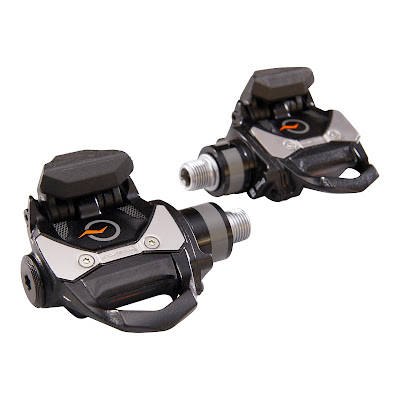
The Best New Cycling Power Meter

Many people ask me what power meter they should get. That depends on a number of factors, including budget, but also transferability, ease of installation, and user friendliness.

Probably the best new power meter on the market, in my opinion, is the new Power Tap Pedal power meter.
These pedals are very user friendly in the install, and also provide the ability to swap from bike to bike, as well as come from a company which has been doing power meters for a long time!

You can find the pedals here:
http://amzn.to/1LrZGoU

I must state, I am NOT sponsored or endorsed by PowerTap in any manner. I simply use their products.

If you're using these pedals, please share your review here. I am excited to learn how others are enjoying using them!

Coach Vance

Thursday, February 18, 2016

Observations and Experiences at 2016 US Olympic Marathon Trials

I attended the US Olympic Marathon Trials in Los Angeles, this past Saturday. It was an incredible event, and as much as I have been critical of USATF in the past, this is one event they do very well, and do it right. They are to be commended on their venue, sponsors, course, and coverage via TV, internet and media.

As I watched the event, and especially post-race, there were some things which really stood out to me that every athlete should take away, whether racing at the Olympic Trials, or simply going after a PR or some other major goal for themselves personally.

Watching the race on TV, or just reviewing it through the media, you'd think it was all celebrations and happiness. You saw the heartache of the 4th place finishers, and felt bad for them, I'm sure. But you walk away seeing 3 happy people and only 1 sad or disappointed athlete per gender. But that's not really what happens when you're there.

I was watching the race and seeing athletes who were DNF's, limping, crying, sitting alone with their heads down, before the races were even finished. I saw athletes cross the finish line in tears, realizing they hadn't run very fast in terms of time, which had a lot to do with the course and conditions. But they also hadn't been where they thought they might be.

I saw family members of athletes needed to be consoled. I stood with Luke Puskedra's mom at the finish line, who was holding his daughter, while she stressed about the fact her son was in 4th and trying to grab that last Olympic spot toward the finish from Jared Ward. It didn't happen for him.

There were 211 men qualified, and 246 women. You saw 3 finish and make the team. Think about that for a second. Over 450 athletes who qualified for the event, trying to live their dream and accomplish their likely life-long goal, didn't achieve it. Only 6 did. But if you watched TV, it was all about the fulfillment of an Olympic dream, as though each athlete was going to have that happen. But it doesn't.

Sometimes you don't get what you want. There are plenty of tears, plenty of upset athletes, but we highlight the few happy ones on TV. The truth is we call it competition for a reason. Someone loses, and usually more people lose than win.

You can do all the work and not reach your goal. You can do everything perfectly, and it can still not be good enough. This is hard for athletes to comprehend and understand some times but it is a reality of competing. And of course, it is very rare we do everything right in preparation and training, as well as execute a perfect race.

One can and should be happy to make the Olympic Trials, but telling these athletes that is like telling you good job after you fell short of a dream result at your key race. I'm sure it is little consolation if you really committed and cared about the result.

So what is my point? My point is that when you decide to take this performance journey, you aren't promised anything. You likely should be promised that you won't be successful, especially as the goals begin to reach elite levels. You might come close, but you aren't deserving of the result you want just because you work hard and are dedicated. Winning and high performance is about a combination of ability, fitness, coaching, strategy, health, commitment, race execution, and even luck. Many athletes think because they have some ability and commitment, they should see the results. But that's only a part of the high performance puzzle.

I'm not trying to push you away from trying, but I am trying to get you to not focus on the result. The process of going after your goal is the real rewarding aspect of sport.

Be patient, and don't expect anything. Have confidence in your preparation that you have the opportunity to perform at the level you want, or the goals you want, but to expect these to happen just because you worked hard isn't realistic. Yes, you likely aren't going for an Olympic team spot, so you're not competing against the elites, but you likely are competing against a much larger population base than the Olympic Trials athletes were. There's probably more than 200+ athletes in your category, or chasing the championship level you are.

You will have set-backs. You will fail and get beat at certain races. You might even hate the people who beat you, but it will happen. Does this mean you wasted your time? ABSOLUTELY NOT. You will learn more about yourself in the losses than the accomplishments.

Just keep in mind, it isn't all Olympic berths for everyone, or happy endings. You're taking on this challenge of sport because it isn't easy. So don't expect easy, promised results. But this also makes the great results you do have, that much more rewarding.

Coach Vance

Wednesday, February 17, 2016

Babbittville Radio Interview - Triathlon 2.0

Bob Babbitt this past weekend invited me to go on his radio show live and discuss a number of topics, from my new books, Triathlon 2.0 and Run With Power, to Triathlon at the Olympic Games, high school development of runners and triathletes, as well as USAT's approach to athlete development. Take a listen, as I think if any of these topics interest you, you'll enjoy the show.

http://www.babbittville.com/babbittville-radio/jim-vance-triathlon-2-0/

Coach Vance

Monday, February 15, 2016

W/kg at FTP of Elite Ironman Triathletes

A few years ago, I asked myself, "Just what type of rider has it historically taken to be a top level long course triathlete?" When I sat down to find the answer, it lead me on a journey that ultimately lead to writing the book, Triathlon 2.0: Data Driven Performance Training. The goal was to see what the data says the performance requirements are to be at the highest level. This eventually led me to wondering what the different levels of performance requirements were for different genders, ages and goals, thus the book.

The elites I gathered information on, I wanted to know what their FTP was on the bike, (bFTP), and what their w/kg @ FTP was. I even took some non-long course triathletes to see how they compared. I always wondered if there was a power profile for triathletes, that could be created, like Coggan had created for cyclists. It became clear it wasn't that simple, as the population of triathletes is much more diverse than cyclists in terms of strengths/weaknesses, but that w/kg @ FTP still matters. So I am going to share some of the items from my book in the coming posts, which help show what the level of the sport is for Ironman triathletes, from age group males and females to elites.

But before I share the age-group power profiles, I will share the elite profiles. Some of these are from publicly available information, such as power files, blogs, websites, and more. Some of these are estimates, but based on many known variables, so I am confident they are very close. (Even those that are estimated are only a few.) This table is a few years old, but I haven't shared it until now, so it could have some changes, especially in the accomplishments category. It's also possible athletes could have lost or gained more mass, and even raised or lowered their FTP. For example, it is quite possible and believable based on Tim O'Donnell's 2015 performances that his numbers on this chart have improved. This was really just a snapshot in time, but a good picture of what it takes to perform at the highest levels.

The Power Profile Ranking would be where the athlete would rank on Coggan's power profile as a cyclist. I didn't list each athlete's ranking, just highlighted a few thresholds where the categories changed or were most important. You'll notice I also included women, highlighted in blue, and some of them have better w/kg values than the men. This shows how some of the top women are very competitive, sometimes even against the men.


(Click on image to enlarge)

What does this chart mean for you? If you're looking to compare yourself against the best, you now have a barometer to measure against. 

Is it all about w/kg @ FTP? Not necessarily, as it depends on the course. If the course is flat to rolling, maximal FTP relative to aerodynamic drag matters most, but this drag value won't vary significantly would be my guess, making max FTP the most important. If the course is extremely hilly, w/kg matters much more. 

But notice the amount of wins, podiums, etc, and the prestige of the accomplishments are concentrated near the top. Want to get better? Raise your w/kg @ FTP. 

Anyway, the point was to share this type of information and data with the triathlon community. If this is the type of stuff you love, to measure yourself and use data, I am pretty sure you'll love my book

Enjoy, and good luck in your training and racing!

Coach Vance


Sunday, February 14, 2016

Opinion: I Can't Celebrate Galen Rupp's Win at US Olympic Marathon Trials

In a continued theme of sharing my opinion on controversial topics of endurance sports, I will share my thoughts after attending The US Olympic Marathon Trials at Los Angeles this past weekend.

If you have read my blog recently, you know my feelings on *Ryan Hall. I understand and appreciate the commitment to performance at the highest level of sport. But once you cross into an area where you are trying to find loopholes in the doping regulations, you are becoming a doper yourself. If you can't sustain a level of training without medication designed solely and specifically to help you sustain it, you're cheating. It's doping. 

In the 2012 London Olympics, the men's 10,000 meter run was probably one of the most exciting races for an American I have watched in distance running in my entire lifetime. Galen Rupp, like *Ryan's great performances, had me in awe, excited about the future of the sport of distance running in this country.

But then the truth began to come out. And it is no surprise that Galen Rupp, like *Ryan Hall, is in the same category, training under Alberto Salazar and his Nike Oregon Project, (NOP), and has been a part of not just thyroid medication, but is accused and being investigated for a series of anti-doping violations, including testosterone treatments.

So I will now refer to *Galen Rupp with an asterisk as well, (as well as *Alberto Salazar), from this point forward. But even worse, as I watched a great race unfold in LA, I saw a winner of a race celebrated, as though there is no fire where there is smoke.

(Full disclosure: Meb is my friend, and I have known him for 21 years, since we were both 18, training some together in college, and racing each other a lot. I was obviously cheering for him, but he is on the Olympic Team, and that was the main goal, whether winning the race or getting 3rd).

Even worse, in what I can only describe as disgusting and disillusioned, is the response of much of the running community, toward those who are speaking out. One quick look to the YouTube video comments on Kara Goucher's post-race comments, and LetsRun threads on her comments, and you would think she was a doper, based on how they treat her. (It's one of the reasons I don't contribute to message boards like that.) To sum it up, they are burning her on the cross for even making the allegations, despite the fact she is supported in her statements by her own experience, other individuals and a lot of evidence. It's like Lance Armstrong, Part 2. To shoot them down is to treat them like Greg Lemond was treated, or Paul Kimmage, or others who tried to speak out but their careers were ruined because people didn't want to believe something so good could be so wrong. *Galen and *Salazar may be winning races, but they are not above the rules. And they are not above answering to the evidence. They are innocent until proven guilty, but let's not act like strong suspicions shouldn't be considered, when the evidence is mounting.

One can argue the timing looks bad, because she got 4th and it is at a major event. I think the timing is exactly the right time, when the sport is in the public's eye, and she can show she did things the right way and was still successful, while the ones we believe are cheating won.

I respect Kara Goucher. I respect her husband Adam. They were a part of Salazar's NOP crew, and left because they knew what was happening was wrong. Adam decided to walk away from the sport and keep his conscience. I wish I could say the same about others. I have heard some say they both did the things within the NOP, so they are guilty too. The difference is they left because of it. They spoke out against it. They didn't wait until it became news and then suddenly were against it. They've never once tried to defend it, or hide any of it. They didn't get caught and then have to apologize. They've spoken out from the beginning.

I hope this is completed and settled before the Olympics for *Galen and *Alberto, so if they are innocent, some can celebrate them. I won't be able to do so, nor remove the asterisks though, because they are just like *Ryan, trying to loophole the anti-doping regulations. To me that is doping. But if they are guilty of even more, I would rather have the clean athletes representing my country.

Coach Vance

Friday, February 12, 2016

TBC Podcast on Running Power Meters

If you're looking to learn more about running power meters, the boys from TrainingBible Coaching, Scott and Adam, had me on their show to discuss the new book coming out in May on this new technology. You can listen to it here:

Title: Part 3 Running Power Meters
http://trainingbible.libsyn.com

It was a great interview, where I begin to explain some of the cool features, as well as complexities of this new technology. The book will help answer more questions in depth, in terms of the application of how to use your running power meter to train more effectively. I even discuss the advantages and disadvantages of the different products out there currently.

You can pre-order the book, Run With Power, here:
http://amzn.to/20YXfO5

I will be sharing more info on the technology and how to use it, at the TrainingPeaks blog, the RunwithPower.net blog, and here at this one as well. If you have specific questions you would like me to address or discuss, please comment here, or email me at j vance at training bible dot com.

Coach Vance

Wednesday, February 10, 2016

Triathlon 2.0 - Data Driven Performance Training Now Available

I am happy to announce that a book I have been working on for almost 4 years has finally come to fruition. Triathlon 2.0 - Data Driven Performance Training is a book for those athletes who want to use numbers, data and technology to maximize performance. If you use a power meter for cycling, and a GPS for running, this will help you maximize it.


The idea of this book is not to be a numbers drone, training without creativity. In fact, it's the exact opposite. This book is about identifying what metrics are most important to you, as an individual athlete, based on your strengths and weaknesses, and then following those metrics to see how you are responding to the training plan you create. This book will also help you set up some goal thresholds to meet, and ways to assess how you're racing, what your training might need to address.

There's never been a book like this. It doesn't have training plans, it lets you be the coach and learn to be better at coaching, whether coaching other athletes or yourself. I am sure you will enjoy this book, and learn at least a few things you can use and learn to better examine your power and run data. The better you train, the more confident and fitter you are at the start line. 

You can order the book by clicking on the image, or going to this link: http://amzn.to/1Kcgks3

Good luck! 

Coach Vance

Monday, July 20, 2015

Ironman and 70.3 Speed and Pace Charts

Many athletes want to achieve a certain split, either for the bike or run, but have little idea of how fast that split actually is. The following charts are little cheat sheets I created for reference of the actual speed/pace that correlates to the time/split. For running, we did it in both min/km and min/mile.

Special thanks to Dan Feeney, for his help creating these. Enjoy and feel free to share, but please keep credit label on the images.


Coach Vance


Tuesday, June 2, 2015

7 Pre-Workout Routines for Better Performance

Here's an article I wrote for TrainingPeaks, which discusses some great routines I use with my athletes.


7 Pre-Workout Routines for Better Performance

Have you ever stumbled out of bed and wondered why it takes so long for you to gain your balance or be able to walk straight? Or have you ever sat for so long in a car or at a desk that the first few steps you wonder if your legs are listening to what your brain is telling them to do?
These are just a couple examples of how the connections between our brains and our muscles are sometimes not functioning properly due to periods of non-use. In the world of physical therapy, it is called neuromuscular activation. “Neuro” comes from the nervous system, which sends the signals from the brain to the “muscular” system, to activate the muscles.

Physical Therapy

Many physical therapists work with individuals just trying to get them to utilize muscles which aren’t firing or being used in common movements which would greatly enhance the strength and stability of the person during the movements. Most athletes scoff at this idea, but the research shows significant performance differences with neuromuscular activation improvements and some simple routines prior to bouts of exercise can be very effective at improving activation. For example, most athletes have seen dramatic neuromuscular improvements in the weight room, just in the first few weeks of lifting weights. It takes six weeks for athletes to show muscle growth from strength training, so those first six weeks of strength gains from those routines is almost entirely neuromuscular adaptation and improvements in activation.
You can read the rest of the article here...

Enjoy and good luck!

Coach Vance

Thursday, April 9, 2015

Test Workouts and Data

One of the biggest reasons I use data with athletes isn't to simply stare at numbers and restrict athletes with the numbers. It's actually to help the athlete see their improvement, raising their confidence as the key events near, so they are on the start line, prepared and believing they can perform well. Yesterday, an athlete logged this in TrainingPeaks, which shows the value of the data from test workouts, and how it affects the athlete's confidence, excitement, and even sense of fulfillment from the work they are doing...

    Monster day on the bike. I noticed last year I did this exact same workout 17 days out from Nationals also. Check out the comparison:
    Today's Wattage by 5 min: 415, 395, 404, 403, 400, 393, 395, 398
    Last year wattage by 5 min: 348, 370, 347, 345, 349, 334, 325, 333

The workout was 8x5 mins, with 2 min recovery. And he was the one who went back and looked up the workout from the prior year, and listed the numbers from the session, not me. The data was so clear to him and his improvement, he was excited to look back and see how it compared.

This athlete is preparing for USAT Collegiate Triathlon Nationals in a few weeks. Last year he set the bike course record at Nationals, so seeing this big of improvement in his numbers, he knows he is capable of even better this year, and excited about it. That success in training is the basis for his mental preparation and focus on the startline, able to focus on himself, not worrying about the competition, or other things out of his control.

If you don't have data to compare your workouts, and track how your training is going, you're missing an opportunity to be truly confident and mentally ready to race.

Coach Vance

Wednesday, January 28, 2015

Race Planning - Better than Good

“Everyone has a plan 'till they get punched in the mouth.”
-          Mike Tyson

Mike Tyson was one of the most feared fighters in the history of boxing. Yet, there were plenty of experts in the sport who spoke of his weaknesses and how to beat him, as though it were not that hard. Many of his opponents trained and planned to beat him according to his weaknesses. And much like the quote above from Tyson, those plans may have been very well devised, but once the match started and they took those first few punches, dealing with the adversity of the match, it became a challenge to stick to the plan.


That’s triathlon and racing. No matter how well you plan, when you get into the big races, against the toughest competition, your resolve and steadfastness to that plan will be tested greatly. 

Your plan better not be good, it must be great. And it should have contingencies if the punch to mouth was more than you expected. 

Coach Vance

Tuesday, December 9, 2014

Simple Steps for Planning Your Season

Here's an article I wrote for TrainingPeaks on how to plan your season, simply and effectively. I think you'll find it helpful if you're looking to find that breakthrough.

Admit it. You’ve seen patterns in your training and racing, and how the results are affected. There’s a time of year you find yourself “killing it” in training and races. There are other parts of the year where you struggle, battle plateaus, mentally struggle, and can’t seem to find the magic on race day that you found in other times of the year.

Phases and Concepts

It’s time to review your planning for those seasons, (or lack of planning), and try to learn from the patterns and plan your training so you can avoid the roller coaster. Ideally, a season shouldn’t have many up and downs, but sometimes a step back at the right time, both mentally and physically, can prevent big peaks and valleys. I prefer to use three phases when planning: Transition (period of recovery between seasons), General Preparation, and Specific Preparation. These will be discussed in more detail below.
In addition to planning out your season in phases, you need to look at a two key concepts that we know about training- variance and specificity. Both are necessary in order to plan your season effectively.
You can read the rest of the article here. I hope you enjoy it!

Coach Vance

Tuesday, December 2, 2014

Is it really race nutrition that's the issue?

If you're finding that in an Ironman you always have stomach issues you can't explain? Feeling frustrated that suddenly your nutrition plan fails you? Maybe the problem isn't your nutrition?

There is no nutritional plan on earth which will make up for poor pacing. If you push the bike, you run the risk of the stomach becoming too sensitive to handle what you put in it. Put more in your stomach, and the odds of GI distress is even greater.

If you race at a higher intensity than you train at, and then suffer stomach issues, the issue isn't the nutrition so much as it's the intensity and pacing during your race.

Many athletes think the goal is to shove as many calories in their gut as it can process. The goal should be to simply take in as much as you need to accomplish your goal. Anything more than that, and the risk of GI distress greatly increases, ESPECIALLY if the athlete is racing HARD.

If your training doesn't match your race intensity, and you are having stomach issues, look at your training and race execution, first, and then match your caloric intake and concentrations to that proper intensity.

Coach Vance

Wednesday, October 22, 2014

The 2015 Ironman World Champs - Women's Race Basic Numbers

Yesterday I posted the basic numbers from the top 25 men overall, and today I am sharing the top 25 women. More data and insight coming soon. (Click on the image to enlarge).


Coach Vance